Shopping Basket
Your basket is currently empty.


Browsing new bikes is one of the great pleasures of motorcycling, until you hit the spec sheet and find yourself staring at a wall of numbers, acronyms, and units that seem to require an engineering degree to decode.
What does it all mean, and more importantly, what does it tell you about how a bike will feel to ride?
Here's a plain-English guide to the terms you'll encounter most often.
The 'cc' figure (cubic centimetres) tells you the total swept volume of the engine's cylinders, i.e. how much space the pistons move through on each stroke. It's a rough guide to the engine's size and, broadly, its power potential.
A higher cc doesn't automatically mean a faster bike — it depends entirely on what the engine is designed to do — although it’s a useful reference point when comparing models.
BHP is a measure of the engine's power output — specifically, how hard it can push. The 'brake' part refers to the dynamometer (or 'brake') used to measure it, not the brakes on the bike.
Sometimes power is represented as CV or PS, which are metric versions. 1 hp ≈ 1.014 cv so they are broadly similar measurements.
You might also see a figure in kW. There are approximately 0.75 kW in 1 HP, so 75 kW = 100 HP.
More BHP means a higher potential top speed and faster acceleration, all else being equal. Bear in mind that a bigger, heavier bike will need more power to move it.
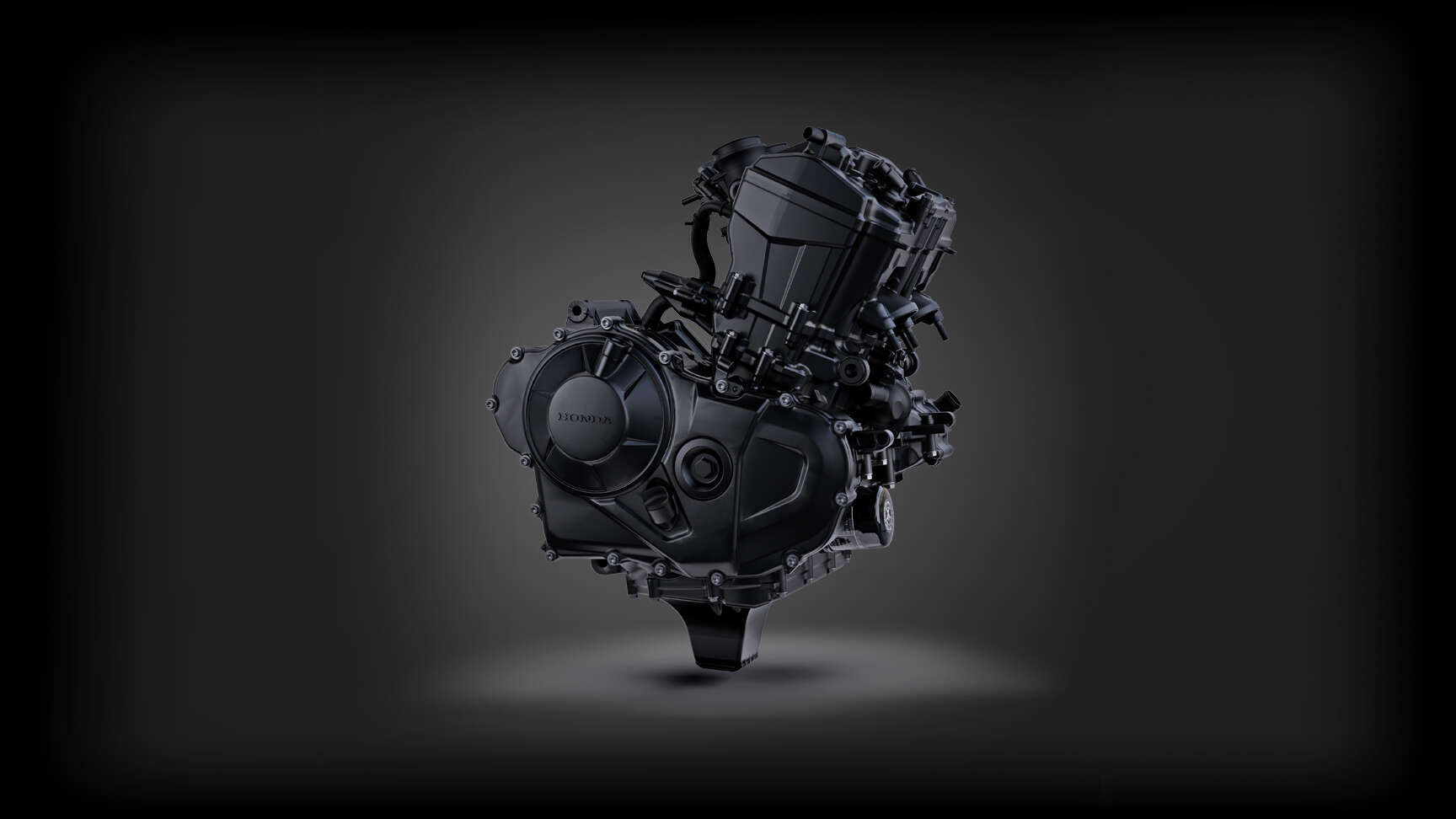 Torque: Nm (Newton-metres)
If BHP tells you how much power an engine produces, torque tells you how hard it pulls. Torque is the twisting force the engine generates; the thing that pushes you into your seat when you open the throttle.
Torque is measured in Newton-metres (Nm) and is typically quoted alongside the rpm (engine speed) at which the peak figure is achieved. A bike with strong low-down torque — peak torque arriving early in the rev range — tends to feel effortless and easy to ride. A bike that makes its torque high in the rev range needs to be worked harder to access that performance.
Air-cooled engines use the flow of air over the engine fins to regulate temperature — simple, although less suited to sustained high-speed running, heavy traffic or hot weather.
Liquid-cooled engines use a water-based coolant circulated through channels in the engine, allowing tighter tolerances, more consistent temperatures, and typically more power from a given displacement. It also reduces emissions.
Oil-cooled is a middle ground, using engine oil as a supplementary coolant to air. It became popular in the 1980s/90s and is less common these days.
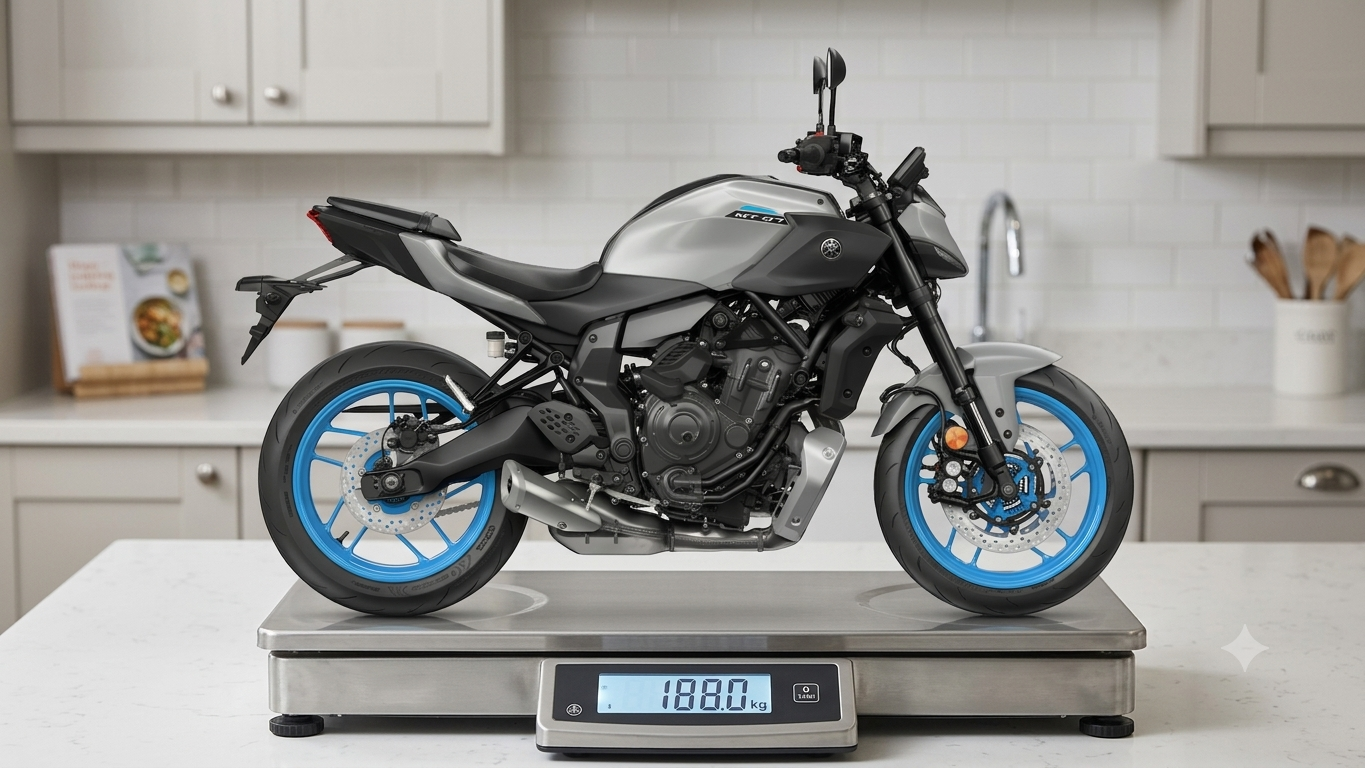 Wet Weight vs Dry Weight
This is one of the more practically useful figures on a spec sheet, and one of the easiest to misread.
Dry weight is measured without fluids: no fuel, no oil, no coolant. It's the figure that looks most impressive but tells you very little about what the bike actually weighs when you're trying to pick it up in a car park.
Wet weight (sometimes called 'kerb weight') includes a full tank of fuel and oil in the engine - a bike that’s ready to ride. This is the number worth comparing.
Front and rear suspension terms can look intimidating at first sight, although the technology is relatively straightforward.
Telescopic forks are the standard front suspension arrangement — two tubes that slide inside each other, compressing a spring and damping fluid inside. They've been the norm since the 1950s because they're effective, simple to produce, and easy to maintain.
USD forks (Upside-Down, also written as 'inverted forks') flip the conventional arrangement, with the larger-diameter outer tubes at the top, and the inner tubes at the bottom connected to the wheel. This reduces 'unsprung weight' (the weight the suspension has to control), which improves handling precision and steering response. USD forks are common on sports and performance-oriented machines.
Swingarm refers to the component that connects the rear wheel to the frame and allows it to move up and down. A single-sided swingarm supports the wheel from one side only, making it easier to remove the rear wheel (useful on sports bikes). A twin-sided swingarm supports the axle from both sides and is more common on everyday road bikes.
Monoshock (single rear shock) is the near-universal arrangement for rear suspension on modern bikes: a single spring-and-damper unit operated either directly by the swingarm or via a linkage system.
Preload, rebound, and compression adjustability may also appear in suspension specs. Preload sets the spring's initial tension for different rider weights. Rebound controls how quickly the suspension returns after being compressed. Compression controls how quickly it compresses in the first place. Higher-spec bikes offer separate adjustment for all three; entry-level machines may offer preload only, or none at all.
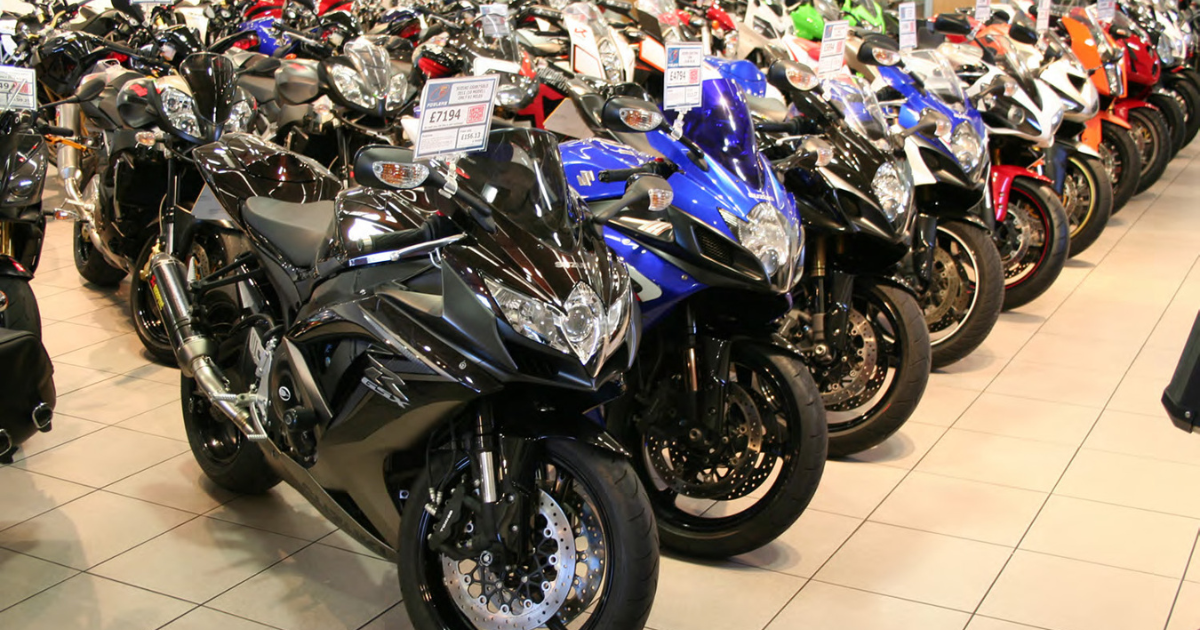 Putting It Together
No single figure tells the whole story. For example, a bike with modest BHP but strong low-down torque can feel just as fast in everyday riding as one with a higher BHP figure. A heavy bike might be more composed at motorway speeds, while a lighter machine is often more maneuverable at low speeds, such as town riding.
The thing to remember is not to get too hung up on the facts and figures. The spec sheet is a good starting point, a way of narrowing down options, but a visit to a showroom, sitting on and test riding a prospective machine can tell you far more than any number ever can.
We know that’s a lot to take on board. Our experienced showroom staff will be happy to answer any questions and explain the differences between the huge choice of motorcycles in our Bristol showrooms.
Sign up to our newsletter, to receive a 10% OFF code to use on Clothing & Accessories plus all the latest news offers and more.